Why the Blog......

9 years now into the blog, and lots and lots posts on the SWOFFING (Salt Water Fly FishING) in and around Darwin - maps, flies, outings and musings

Hope your enjoying it!

Showing posts with label fly fishing. Show all posts

Friday, September 4, 2015

What's in your fly box??

Well with my fly boxes that I carry in the boat - there are several boxes to choose from
Let us explore their contents.

The main box is a two-sided boat box a mate got for me
              - Thanks Simon best present ever! (that i didnt have to buy for myself!)
See thru lid is great, so I keep the flies I use the most in it. always on the deck - not in the tackle bag

Fly Box #1 - Side A
This side has my 'go-to' white goat clousers - a must have in tropical waters - and a few larger clousers if the bait being eaten is bigger.
It has a few barra flies (bucktail minnows, whistler variations) but most of my barra flies in another box - these are just there for quick access when needed
It also has in it my new favourite flats crustacean fly the Bynoe P&C (see this blog for details) a prawn-crab mutation of a fly

Fly Box #1 - Side B

Then SideB has my surface flies - Hot Lips Gurglers, Gurglers in a few sizes, crease flies and hard bodied poppers. It also has 30 or so silicone surf candies  (there is a second row that are slight longer in length under tails of the first row on lower left) for the ever-present trevally, queenies and small macks that hang off nearly every rock bar in Bynoe and Darwin Harbours. It also has one algae fly (bottom left corner - used to have four there but they got used - must tie more) for milkies if some come cruising past sipping scum off the waters surface.

Fly Box #2 - Clousers

This box is assorted extra clousers in different materials, colour, size and eye weight combinations. There is also a few crustacean patterns mixed in the box as well
All greens for early morning, Wild Things in fluro orange and chartreuse - used to be hot pink and chartreuse in the box too - will have to tie a few more of those as well.
Also in top left the box has four BFCW Flies
             - that is Bynoe Flats Crustacean Wannabe flies - see previous blog - BCFW Fly
This box is looking a little empty
           - will have to fix that before the Bynoe Sheep Station Stakes later this year (October 10th & 11th)

Fly Box #3 - Big Arse Minnows box
This one has my mega flies in it
Big flies for big fish - the ones on right are whistler variations - big barra, big Gt's - 4/0 to 6/0hooks, some tandem hooks, most with mono weed guard loops. Also a few really heavy flies for bottom bouncy for black jew (hooked a few but haven't stopped one yet!!!) and reef dwellers but very boring fishing waiting for the fly and line to get deep enough!)
When I see big bait being harassed and bursting through the surface - this is the box of flies I go to - My 10weight rod is always rigged in the boat ready to cast with a large fly on the leader - just in case the 'big one' comes along!
Bottom right are my tandem hooked garfish flies for big Spaniards - worked well on east coast, no so yet here in Darwin region.
Left side has some double bunnies, some segmented baitfish with two heavy duty hooks 
Bottom left - are some new flies tied recently my version of the GnG Hollow Mullet - see previous blog for details
Finally top left - a heap of bend backs in popular hard bodied lure colourings  - tiger, elton john, gold bomber. These on quite strong and heavy hooks.

Fly Box #4 - Baitfish

Ok, this fly box on the left side has a heap of epoxy surf candies and some jelly bean candies (fatter surf candies). A heap of white polar fibre minnows on various hooks and eye configurations. Some on worm hooks designed to be weedless. Got five good fish on one of these versions of this polar fiber fly in succession before putting the hook through my thumb when releasing the fifth fish and the leader got tangled in the fish's thrashing and it dragged the leader thus the hook, through my hand and the hook point drove into thumb. Great fly - but that mishap cost me 6 hours waiting in emergency (I left barb not crushed and it was resting against bone, so was quite painful when I tried to de-hook it myself). And three hours driving round trip to hospital and back to tournament to fish next day!

Top left has a few mackerel flies that are nothing more then a hook, a tentacle off a rubber squid (those that are used in trolling applications on the head of a fresh garfish) and the tiniest touch of flash. These are for certain times when very, very big macks visit the tip of Indian Island, right up in the shallows each year sipping small baitfish as gently as a trout would sip a mayfly. I was amazed first time I caught a huge Spaniard in such shallow water on such an anorexic and small fly - almost didn't use the fly when it was suggested - but listen to the locals when you first arrive in a new location - always!
Also on middle right side are some flashy profile flies and above them some silicone coated fat boys for dirty water - great presence in the water - they give a big and noticeable bow wave when retrieved such is their profile and punch through the water. Also a few extra 3/0 bendbacks spoken about above in between the red/white and all yellow silicone fat boys (the yellow ones here were nicknamed 'Canaries' on a trip to Weipa some 25 years ago when it was the most productive fly I took - everyone in the group wanted one!).
Top right of the left side are some chartreuse rubber tail coneheads, these I used for Mr Twister soft plastic substitutes on the east coast (a staple fly for me some 10 years ago) for big flathead in Jumpinpin. Who knows what species might take a preference to them up here in the tropics when everything else fails?

Fly Box #5 - Thing Box - Barra-Threadies-Toga
These are mostly barra buster style flies - variations of whistler and pink things
Barra busters have rabbit zonker as their prime tying material. Most have weed guards as they get cast  more often then not far into mangroves and billabong weed beds. The red head white tail version is my favourite colouration for toga - yet my usual fishing partner uses orange/black colourations and we both catch plenty of toga! Its a confidence thing I guess. The pink and white colourations are great flies for Bynoe flats when barra are cruising about - depends of course on water colour at the time. This box is crammed full of these, even have a foam insert to squeeze in a third layer of flies into this fly box.

Fly Box #6 - Crabs
Always have a box of crabs in neutral colours in case of blue/black bastards. And if the fishing gods are smiling your way - and you are out the front of Bynoe and close to its sandy islands - the whispered presence of the elusive Permit becomes a reality
So here are the boxes I take on the boat - many if not most - just in case of the off chance something unique and different (hopefully big!) comes along. 
But so too plenty of the usual 'go-to' flies if the usual species are about at the location we find ourselves SWOFFING
The wooden boxes I use for my flies are what my students make in Yr8 wood work class from recycled wooden pallets- each year for examples to the students I make a box or two for me or gifts for others as well

As much fun as they are to tie.....................  (if u need any recipes or tying instructions - contact me)
Go use your flies, they cant catch fish when not in the water!
                  
               The Stig.


Friday, September 26, 2014

BSSS Day 2 report

BSSS Day 2 - (sorry not a lot of pictures as just average size fish caught, lots of them and too busy chasing points for the comp - even forgot to turn my head cam on!)

Again up at 5:30am, wide open throttle by 6:15am (the deckie needed a hot coffee today!)
The species for the day were: mackerel, any trevally (Golden, GT, Tea-leaf etc all frequent Bynoe Harbour), barramundi, threadfin, and tuna. Now the tuna would be very difficult given time of year, but two species could be targeted in the same area, as well as two other. Flats for barra and threadies, reefs/rock bars for the macks and trevally (well GTs anyway).
We made for Simms reef for the macks of yesterday but frustratingly nothing for first 2 hours.

We saw a little splash on shallow side of Simms reef and after watching this for 10-15 minutes finally went over to get at least something even if tiny small as the splashes seemed to indicate.
However, once there, the water was excitingly boiling with fish and we had 45 minutes of fish after fish. GTs to 38 cm and queenies to 45cm mixed together in a patch of 2m deep water behind a sand/gravel bar. The deckie was really enjoying himself (so was I). The water tidal flow created an eddy as it curled over and around the sand bar and the fish were boiling the water with their feeding activity. There were some small macks too, but we didn't manage to get hook them. Once the water dropped a bit more (25-30 minutes later) the action died off just as quick. We moved  back to front to the occasional large slash of fish along a tide line but nothing consistent and for an hour casting no result.

The water on Sunday was mirror calm, no wind - making it quite hot. Something we hadn't experience in quite a few months. The sweat was beading down our backs as we were casting and trying all sorts of retrieves to entice the macks to bite. We saw one or two slashes of a fish or two behind the flies but action was very very very slow.

Given the ultra calm conditions we decided to head into wide open water to find some working birds.
We came across 10+ adult dolphins and one baby swimming with them.  We cut the motor and watched them for 10 minutes - so graceful sliding through the water. They were in about 4 metres of water harassing some quite small 30cm grey macks (which we could catch!), this dolphin food was skipping across the surface in 5-10m skips to escape the dolphins.

A little later, we came upon some sand/gravel bars way offshore that some large queenies were  patrolling- we got follows but no takes. Awesome to see such fish in such clear and shallow water, Must visit this spot again!

Later a massive black backed ray about the size of a dining table came by and I cast to it in hope of an accompanying GT, however the two GTs that appeared off the ray's back that chased my fly caused my knees to wobble. They were absolutely huge 90+cm plus versions. Massive in shoulder thickness and body depth. Again sadly only a couple of follows was all we got - no hookups.

The rocks and ledges nearby however were covered in fish - Stripies, Moses perch, Queenfish, and sub 40cm GTs. The deckie, thoroughly enjoying himself, got 10 or so GTs in 15 or so casts with a crease fly.  He also enjoyed a shark pinching one of his fish, after this he switched to one of my mega flies to target bigger fish. The little guys were very keen to slash at the mega fly but not the big fish.

this Moses Perch that was smaller than the fly it ate!
While he was casting around trying to catch a big one, I with my small clouser (orange over white) caught a cricket score - full of stripes, Moses perch, the occasional queenfish and small GTs - all racking up the points. I too had a large shark take a 30cm fish right at the side of the boat. While it hung onto the fish, it wrapped my fly line around several reef lumps before breaking off the leader. Luckily the fly line survived the episode without any nicks.

We had another mega GT visit working along the reef edge looking for a live meal and it also chase one of the small stripies I had on the line, but saw the boat and slithered away between the structure nearby. Peter again went to the big flies for a while, I was still catching heaps of reef species one after the other, a fish almost every cast not big but lots of them. I didn't  put them all on the scoresheet as they just keep biting and I kept casting with out worrying about the scorecard. In a moment of calm, I would write a few of the lengths of fish caught down.  We had multiple double hook ups. I really enjoyed Peter working the fish into frenzy with his crease fly and I would then cast behind the fish when the popper was removed - resulting in an instant hook up on the small clouser.

Working around the reef edges we found some queenies and macks of one reef point. The wind was picking up making it hard to hold our position. As the tide was rising, I parked up on the reef and we cast to the bubbling bait off the point. I managed to snag a mackerel in the top lip, giving me two species and thus into bonus points. Up to that time we were not comp focused, mainly enjoying a great hot bite and many species. Now things changed comp wise with two species from the list.

Peter was working his hardest to catch a mack but time was short to lines out and heading back to put scorecards in on time. Peter hooked up to something good and we hoped it was a mack but it was a 50cm queenie. Peter got all loud and excited about something. When he finally calmed down it I found out it was another mega GT that took interest in his queenie making - it look like a live bait, the GT was so large.

Peter quickly measured and released the queenie and cast back to where the mega GT had moved and instantly hooked up to it. Line tore off his reel, I put electric down, pulled plumb bob anchor in and gave chase to the fast fleeing fish. The fight was intense and just as we were getting close to the fish 20 minutes later the leader parted- BUGGER! To say the least!

Given that disappointment we motored straight to the ramp to get the score cards in on time.
Both us had a great day of sighted fish, peter a few big fish on and seen - something he had been working a while on that gave him great enjoyment. With my bucket filled scorecard I was hoping to move up a few positions.

A few of the front runners of Day 1 getting their 600 point or so, I was feeling confident with my 1300 plus points for Day2 (still wishing I had gone to the flats to get a barra or threadie). In the end I managed third for the comp and for Day2, which made me mildly regret my not so good fish wise Saturday . The two in front got three species and the subsequent extra bonus points and managed 1500 plus.  points for the day.

It was a great weekend, plenty of learning curve and a heap of fish. The sighted mega GTs and queenies gave me many hopes and ideas for future trips. My flies worked well, Everyone loved the boat boxes that were donated. Lots of positives.

Not to mention - great people to fish with, as too great accommodation and food at the Sand palms motel and pub
Check out the Mobs blog site for more BSSS 2014 trip reports.
here is five minutes of the small fish action along a reef edge -


Tuesday, September 23, 2014

BSSS 2014 - Day 1 report

BSSS day one.
Arrived 8pm Friday, given the low key nature of the comp, no real Comp info session.  After chatting to various BSSS SWOFFERs fishing the comp, it managed to swiftly tick over the clock and we were in bed snoring by 11pm.
Up at 5:30 Saturday morning, we launch by 6:10am (awesome morning by the way!)


The five species for Saturday were: queenfish, any cod species, bream (pikey version up here), javelin or ock ock, and lastly blue salmon.

I really like the manner of scoring in this comp. All fish caught are worth 1 point per cm, but of the chosen five species for the day, you multiply the top five lengths by the number of the chosen species caught. For example catch 3 of the 5 chosen species and all the top five of those species are multiplied by 3. Really makes you think about where, when and how you will fish to catch those chosen species drawn from the proverbial hat list of 20 or so species. Best thing is it is all new the next day with a new five species chosen.

So we planned to fish the flat behind turtle island first up.  As we saw heaps of blues on this flat two week earlier - plus barra & queenies. But like last time the fish that were on the flat were very touchy and not interested in our offerings of clouser, full blown imitative prawns, and every other fly we could think of to no avail. Result of Location one - no score
We planned to then chase blues in a deep hole in a creek nearby after that but the tide had receded too far and we were cut off by a sand bar form the deep hole that always has blue in it, so what now? Location two, again no score.

With the sea flat and almost no wind about we popped the 15 minutes over to Simms reef for a hopeful queenfish before find some filling creeks on the rising tide to target rock bars for OckOck, the bream and an estuary cod - hopefully!

At Simms, we found no queenies but plenty of small Spanish macks willing to slash at the fly (but sadly, not stay tight to the reel)
We lost more flies than when previously catching macks, but we managed to fluke two for about 15 or so flies lost. Great! something on the scorecard

By now the wind was steadily increasing as forecast limited possible fishing locations
We decided then to chase some cod. But risking winds would change our plans. There is a rocky flat NW of Knife Is near the Paspaley pearl work base I had caught cod before so we ventured to it with hopes high. Once there we caught a few giant trevally off rock structure. We had one large cod chase after a 10cm GT, that got us excited for a bit - but all to no avail with the larger flies we cast to it
We drifted over the many rock bars and shallow reefs in this area. The deckie got a great visual catch of a 50cm queenfish hiding between two rock bars that came up to take his fly.

On one little rock platform bear Knife Island, I managed a first of species since coming to Darwin of a 40cm barracuda, which was quite novel to catch.
(insert image of cuda)

We thought we would head right to back of Bynoe to some rock bars to find fish but by time we got there the wind was atrocious for the location we tried. Given the wind was still increasing and it had been such a hard frustrating day, we headed back for an early swim in the accommodation' spool
The deckie managed about 150 or so points and was in 11th place, While I got a few more points to be in 10th place. The front runners were getting 600+ points.

The evening seemed quite short after the awesome group dinner as most were feeling the long day fishing in the wind. After the five species for the next day were drawn, I crashed into bed by 9pm, feeling it to be much much later! (Old man syndrome!)

Despite a below average day - expectations were still high for the next day.
More to come!

Thursday, August 28, 2014

My top five fly fishing video likes

I love making my own Saltwater fly fishing (SWOFFING) videos however, I am just not in the league of the some of the talented fly fishing short film makers out there. watching them gives me something identifiable to strive for in my film making. 

All facets - music selection, image quality, fish caught, locations, equipment, techniques, inspiration - all astoundingly put together.

Aside from Graeme's awesome full length video (Northern Estuary by Insight Fly Fishing) that I watch repeatedly again and again and again........
So much so even my students at my school know exactly whats coming up next! as it is always playing on the big screen projector in the science lab between classes.

Here are my top five in ascending order......
#5 Satori (by same guys as #3)
This video demonstrates the dedication and attitude needed to catch that fish of a life time.

#4 Bad Lands
This clip has three or so SWOFFERs harassing (or being harassed?) by a large school of large Giant Trevally boiling the surface like a school of baitfish. The way the attacking GTs are bulging the surface of the water and shouldering each other aside in an attempt to grab the fly, makes me hold my breathe every time - in a way 'willing' the fish to get the fly and for the line to go taunt singing as it rips through the water. Love it!

#3 Drake Permit
This clip is awesome in its presentation of some single-minded and dedicated SWOFFERs chasing an elusive fish. Absolutely hilarious part where a guy so happy with a good permit on his line one minute changes to a foaming at the mouth wreck seconds later (caution: a few swear words) - we have all been there, haven't we. the guys who produce tis clip have quite a few top-class fly fishing clips.

#2 Bulls of Top
I guarantee that any SWOFFER watching this clip could not contain an emphasized gasp each time the fish in the video miss or nudge the surface fly, time and time again the fish look, half take but no hook up. then there is a series of takes, hard aggressive takes of the surface flies. then the over sized fish posed with their happy captors. such a well structures video. (love the little jig one of the SWOFFERs does early in the clip as they head out to the location - so full of expectation.

#1. Poon Porn
This video gets my casting arm twitching so rapidly, the lines of massive tarpon moving towards the anglers - makes we want to immigrate, today! the massive fish in shallow water, leaping, twisting and turning so rapidly to dislodge the small hook in comparison to head size- amazing.
But there are so many more ............
Go to these three links when you can
7Degrees south - exceptional video on remote island fly fishing - full version on vimeo
High in The Lowlands - about twenty minutes long on Everglades in Florida but same sort of terrain as our northern mangrove areas great inspiration and more dedicated anglers. Also great music by the 'Gator Boys'.
Exmouth, WA  - great fly fishing on Australia's west coast

also go to vimeo.com and look at fly fishing channels - lots of speckled ferals (a.k.a. trout) but find the saltwater gems amongst them


Wednesday, August 6, 2014

Sunday 20140804 report - too damned windy!!!!!

The Wind was up from first light - bugger!
But we still went and launched the boat in the predawn light and headed out front of the harbour for the hoped chance of a tuna or mackerel - wind chop already 10-15cm. The area around the ore loader was like a wash tub - waves every which way tossing my little 4.75m Stessl ProTournmanent punt every which way as well.

Along the way and once at Lee Point - not a thing to be seen in the 20-30cm chop - let alone trying to cast in the exposed region of Lee Point rock bars.


After an hour of being blown about on Lee point, we hugged the coastline checking for probable schools of blue salmon on the Casuarina beaches but none were seen. We kept punching through the chop back into the harbour and the wind. Half way back we found a pod of Fringefin Trevally (Pantolabus radiatus) off Nightcliff rocks but little else. These pretty and little trevally (can grow to 40cm) were scooting through hammering very small bait. They would have looked great in the saltwater aquarium I am trying to build at school.


We worked the usually spots on the way back to the ramp for no sighted fish or bird action

The wind was getting up maybe 20-25+ knots, white caps on every wave and decent swell. My boat with its 60hp merc, loaded with two big 6foot plus guys and esky full of drink and ice can do 27 knots over calm water. However, the part of the trip from Darwin wharf (Stokes Wharf) to the Ore loader it was 5 knots max with the swell, wave and wash assaulting us as if some body was throwing a bucket of water over us every second wave - not enjoyable at all!

When we got to Shelly Island in front of the ore loader we found a touch of respite on the leeward side of it but still no fish.

Not wanting to head back to the ramp as yet and given tide was just starting to turn for the day, we thought we would give the flats at Wickham point a go before it got too skinny. Along the way the Rocks and its several large mangroves that sometimes hold queenfish and trevally at high tide that face the Ore loader were searched - again nothing. Further around the point we were sheltered by the peninsula from the worst of the wind if we stay in close. Positively, we started seeing baitfish being harassed and movement of larger fish at the edge of the mangroves.

The water was very dirty as if stirred up. In amongst the dirty water we saw occasional flashes and surface slashes particularly at the merging area of dirty and clean water, that got us casting with more purpose than at any other part of the day.

We managed a few small queenies, though nothing to break out the camera for (sub 30cm size). There were some other larger fish about but they were focused on puffing up the sand and whatever they found to eat in it. Not too sure what species they were as not quite blue salmon or the like, nor queenies. They had a blueish tinge about them, forked tail with black on the tail, about 30cm long and lots of them swimming around in the dirty water - we could not interest them in any type of flies - they were also very flighty.

After an hour or so there we steadied ourselves for some rough water and headed over to Little West Arm for hopefully some snake drain and barra action as the tide dropped. It was another slow wet ride. Once there we could have done with about a meter less water as the tide timing wasn't right nor were the fish cooperative.

It was a first time visit to the arm for me - it looks like a very productive water. So need to and must plan a return trip with a better tide. The main fish we found were three one meter sharks heading out of the arm, there were also plenty of baitfish and archerfish on most side creeks and drains. But none of the desired fish were found. We went right up to the three ways rock bar (1-2 metres underwater at the tide time we were there) and went 5 or 6 hundred metres up the middle creek, casting repeatedly to the mangrove edges and drains as were moved along.

About 3pm, enough was enough, the wind had exhausted us - we headed home. Out the front of Little West arm, the wind had dropped off a bit, maybe down to 10 knots and the wind with the tide rather than against it as earlier in the day, so the ride home was much gentler on us.

In summary, not much of a day first time back on NT saltwater for my deckie Peter after four weeks back in his home of Canada chasing steelhead and the like but much warmer at least. We wrote this day down to experience and begin to look forward to our next trip.

I was thinking as I write this trip report, of next Sunday as a possible but the wind again is predicted to stay strong - so might head to freshwater instead of Vernon island group as previously blogged about. I will discuss the options in my next blog.

Thursday, July 31, 2014

Planning for Darwin Harbour this coming Monday

So Boat is working wonderfully, didn't miss a beat last Sunday on Bynoe  trip

As such I am quite keen for a trip to Vernon Islands. Last time I went there it was bad tides too, but also bad weather and a massive drop in water temp. However we still caught fish, I got 67 fish of 15 species - diamond, golden, tealeaf, and giant trevally, two types of queenfish, a couple of sharks, coral trout, and many other assorted reef species. And I have been dreaming of getting back there many times but its has never quite worked out.

This time the tides are not what I desire for a trip there - high tide just before dawn so I can get out of Leaders Creek easy and enough water back in creek by lunch so if wind gets up its no hassles getting back in. But these are not the tide conditions for this coming Monday. Though next weekend while not the perfect tides I like, is looking better - that is depending if I can get a 'hall pass'!

On this Monday with a rising neap tide at dawn and top of the tide at 10:30am of 6 something meters - it will be good for pelagics around rock bars in the local Harbour. The low tide is not too low so I can the pull plug at anytime (i.e. no fish or a gale blowing) and get in at the ramp I like to use - East Arm Ramp.

So Darwin harbour is the go this Monday (wife has got me flat out busy Saturday and Sunday - and thank goodness its a long weekend here in Darwin or I would not get to go fishing at all this weekend!

Probably go straight to Lee Point regardless of 40 minute run from ramp I use and whatever wind is around. Then go to current confluences based in relevance to rock bars, wind direction and impact of that wind. The T rock bar south of Mandorah jetty or Weed Reef - the prime second options - maybe even the tip of East Point as good current concentration there at times. There have been reports of good broad barred mackerel off Lee Point and the occasional pack of Northern Longtail tuna which would really make my day to get into some of them. Here's hoping the wind gods are kind and we can move about the front of the harbour looking for actively feeding fish packs or birds working over fish to tell us where the fish are.

However, any fish will do on Monday - I just need to get my fly in the water, any water and get tight with something with scales. Particularly on something I have tied for the purpose.

Here are some Duc Tape minnows I have been tying and using - quick, easy and good results from the fly so far this year - the pattern is all thanks to an old article from the US magazine 'Fly Tyer' and author Jay 'Fishy' Fullum (one of my most favourite fly tiers of all time!).

Duc Tape Minnow. - The Stig say it is really simple to tie.
  1. take a piece of Duc tape as long as needed (10cm is good) and starting a third of the hook shank away from the eye of the hook - fold Duc tape over hook of your choice so sticky side of tape sticks evenly together. It will go over bend in hook shank - that's OK (see step two)
  2. now trim tape to a tapering minnow shape
  3. in front of Duc tape on hook shank, lay down a bed of thread then add some white bucktail on top and sides - ensuring the material covers sides and top of hook shank but not bottom
  4. add in some gills on bottom of hook shank - I use tuffs of webby feather off a black/red 'Bird fur' cape I have.
  5. I then build up a thread head
  6. add 3D eyes and epoxy head - placing on rotating dryer till epoxy is set
  7. tie a few more and go fishing!      Go on! You want to, I know it!

The Fly Tying Stig

Monday, July 28, 2014

Bynoe - Simms and Turtle morning - trip report

Up at 6, on water 6:30am, arrive at meeting point - 20 minutes late (hate being late!), the meeting spot was where a teacher friend's sailing boat was anchored at the mouth of Six Pack Arm, who was spending weekend at Bynoe.

At the sailing boat, a bit of coffee for those inclined and then the bait fisherman swap some live bait and dead bait between each other, before we head off on the 20 minute run to Simms reef at the front of Bynoe Harbour.

The wind gods are kind with hardly a breeze about, though strengthening towards midday.
Arriving at 7:15am at the reef, the high tide is covering the reef, the only sign of its presence is a plethora of tiny bubbles rising to surface, even though hours after it was submerged by the incoming tide. Additionally, due to impact of the tidal flow water pushed up from the depths against the side of the reef structure, concentrates the flow of water and creates a rippled edge to indicate the reef's position (easily seen in left side of the image here and in video footage).


first queenie of morning
Queenfish are herding bait against this line and slashing periodically into them giving me something to cast to. My baitfish colleagues are on the drop off edge drowning baits hoping for the big broad barred mackerel that are suppose to be about.(PostScript: the friend on the sailing boat got one big meter plus Mack, trolling a spoon behind the back of their boat on way back to Darwin in afternoon, and another friend who went offshore, Dundee wide, had large packs breaking the surface with their feeding activity and lots of birds above them, showing where to troll)

Back to subject of Simms Reef, hoping it to be a sign of a good day starting - on the fifth cast of the morning, I catch a small queenfish. Within the first half hour I have 6 queenfish to 40-50 or so centimetres to hand and released. Larger periodic bust ups are occurring on the edge of reef drop off 50-60m away but nothing consistent enough to encourage a move. The danglers (bait anglers) have nothing. The score ends up - 6 to zip, in favour of the feather tosser!

Nothing else for the next two hours, the splashes get less, the wind increases and the reef gets exposed but no more fish. As Simms Reef gets exposed by about a metre of rock and sand bar, it is usually when I get more action but it isn't the case today - time for some flats fishing in the lee of Turtle island.

In hind sight I should have gone straight to the creek and channel behind the island for a hour or so as the water is just leaving the last leaves of the mangroves but instead I fished the couple of small bays on SW side of the island itself. Because by the time I decided to do that, it was high and dry and I couldn't fish it like I had planned

Still in the bays of turtle island, I had one good reaction from a 70 or so centimetre barramundi to the BFCW fly. It was lying very still but yellow tail highly visible in about a meter of water, I saw it too late not 5 or so metres from boat, and the boat despite turning off electric motor quickly continued to drift towards it with momentum taking me to within 2 metres of the fish. A good cast for a change, and as the fly landed near its head, an immediate response from the barramundi as it flared its fins and moved to the fly 30cm away. The fish followed, followed the slowly stripped fly, paused,  followed - before it sees the boat so close to it and flashes away. And that was only the first 10m of the two bays - I was beginning to think my barramundi nemesis days might be lifted this session.

However, 7 spooked and 3 unseen till too late to see barramundi (see later for details) - a nemesis they still are but I did greatly enjoy myself on the journey this time rather than being frustrated by it. But what an hour it was stalking these fish in the bays!

Once so busy watching the fish inshore, I missed three large barramundi hovering in deeper water over a small cluster of boulders on the other side of the boat till my peripheral vision saw them rapidly leave for waters untraveled by black sided boats with a poor sighted, big ugly man on it.

I also saw a big threadfin accompanied by a couple of smaller ones, herding small baitfish with their long chin filaments, the baitfish were 3-4cm and leaping above the surface to escape the predator corralling efforts but as I moved closer the threadfin where spooked by wave slap on the hull (?) way before I got into casting distance.

On the flat opposite the entrance to the Six Pack boat ramp arm, I was moving the boat along the flat after barramundi in the corners of snake drains and along comes this easily metre plus dark shape harassing baitfish along the way. It was a very large queenfish, a single cursing the flats. Again a poor and rushed cast from me, lands the fly on its head and it scoots off rapidly to deeper water. From the episode I learnt to look more closely and careful, along with a few glances further along in case another comes my way. One did (same one?), I had 6 or so casts at it - for a follow or two but no commitment from the fish - I think I needed a different fly on than the BFCW fly. In such shallow water the big fish was half on its side - it would have been absolutely gorgeous mayhem to hook up to such a big fish in such shallow water! All a 100 meres from deep water! Hopefully, next time.

With wife and two young kids at camping ground awaiting my return, I was off the water around midday and packed up heading home by 2:30pm. (PostScript, one of the bait guys I was with stayed out a bit longer and told me the barramundi up one creek he visited went absolutely off  with barramundi 'boofing' loudly and everywhere for about an hour, shortly after the turn of low tide began - not that he got any!)

Overall great day, even though not great numbers or size of fish. The added bonus of the 6-0 scorecard to the SWOFFER, the great sunrise and no wind during the morning session, the awesome flats stalk and cast (poorly cast most times I might add) to sighted fish on the flats, watching one fish react so positively to the BFCW Fly. I'll have more of that any day.

Can't wait to get on the water again! !!!!!!


Friday, July 25, 2014

Boat now starting (Yeehaaaa!), so off to Bynoe this weekend

Got a phone call late Thursday, in middle of a meeting
"do you want to go fishing this weekend?"
The part I needed to replace

Who was this, I thought.......

The voice continued....."If you do, your boat is ready to pickup, and looks like less wind forecast for weekend, which is just right for your sort of fishing" (what's this 'your sort of fishing', I thought SWOFFING was the ONLY sort of fishing, isn't it?)

Still, the penny finally drops and it is 'Frenchies', my boat mechanic who continues, "the boat is fixed and we shut in an hour if you want to pick it up" - I dropped everything

I was in the middle of conducting an iPad training meeting for my fellow teachers, but I gave them all an early mark and raced for the door. "Sorry folks, I got better things to do!"

Instead of waiting two plus weeks for the one particular Mercury part I needed, the awesome guys at Frenchies worked miracles and converted a Suzuki part to do the same job.

Once home I charged the motor battery, then today after coming back from Darwin Agriculture show with the family (gaining lots of 'brownie' points!), charged the trolling battery, checked the fuel, check the oil in motor, checked tyres, and trailer. then sprayed any rust prone bits with lanolin spray.

Clousers
Once that was done, I popped inside to storage area to sort out the gear I would be taking, same as I blogged about previously

Also tied a few more flies as you can never have enough flies with the reported heaps of broad barred mackerel over a metre around the spots I will be fishing this Sunday!

The wife and two kids are coming too, to stay with friends we have at Dundee overnight on Saturday but the fishing on Sunday will be just me - YES! (I am such a hermit according to my wife - maybe so!)

Crease Flies
Report of trip to follow next week!

Wednesday, July 23, 2014

Goldens busting up Darwin Foreshore

One more video from earlier this year

So much wind lately - starting to get annoying, as by 10am, even by 9am, most mornings it is blowing 10 knots plus
I must be getting old or spoiled with the great fishing up here......as I find my enthusiasm wanes in the opposite as the wind gets stronger

So today I went through some old footage and reminisced about no wind days earlier in the year
We had full days of glassed out water and fish readeily seen as they harassed baitfish
Particularly, the video I post today, when I had some awesome action one very still day early in March

I thought to begin with that I was casting towards a rock but as you will see in the video I was mistaken


Wednesday, July 16, 2014

Fly Tying is Foreplay........

While I recognise and acknowledge the need for commercial fly tyers, I have been indoctrinated against them by an expression my immigrant English dry fly purist grandfather told me when I was young about why whose flies I should use when fly fishing is important. He said,......
"using some else's flies is like getting someone else to father your children for you, 
when it is more fun to do it yourself!"
When it comes to fishing with artificials, I have always enjoyed making my own.
While not for more than twenty plus years, for a time I made my own hard bodied lures. Even got some expensive chuck tools specifically made up for my wood lathe to hold several pieces of timber at once to turn to them the shape I needed. Then I would cut them lengthwise to place in wire loops, then glue, then clamp back together, then heaps of sanding - before applying 10+ coatings of paint and finish with an airbrush. Add split rings and hooks, then go fishing. Each lure -  many hours, weeks, if not months in the making.

Using my own personally hand crafted wooden lures made for specific species and locations elevated any captures beyond anything else. The 'yahoos' and screams of exaltation were always more loud and exuberant then for fish caught on any mass produced lure.

Back to tying one's own flies, for me it elevates my fly fishing experience before, then exponentially and additionally impacting when on the water casting that fly to fish that reacts to the fly I made. This could be surmised in a quote from an awesome passage in the book - "Fly Tying by Fishing Guides" by Toni Lolli. Where it says......,
"There's an old saying that fly fishing is the most fun you can have while you are standing up. 
If that's true, fly tying is foreplay."

If this premise holds true and you add the knowledge of the necessity and benefits of sexual foreplay;...... 
the benefit of making your own flies then implies, that the more foreplay (i.e the more fly tying), the more the expectation, and thus, the more the eventual climax and in turn deeper enjoyment.

So I tie my own flies, and I tie a lot. I love my fly tying as unmitigated and absolutely necessary SWOFFING foreplay. Why tie three flies when I could tie using a whole box of hooks, if not several sizes of boxes of hooks.


Every fly tied is like that first subtle and delicate caress, that intimate delicate stage of what is to come. Every finished fly takes me one pulsating sensation closer to the ultimate tightening of fulfilment and ecstasy. In fly fishing terms, the sighted fish, the follow, the take, the tight taught line and the vibrant fish struggling against the strain, ending with the triumphant release of the trophy (a trophy regardless of size) to fight again.

Even writing about fly tying is exciting me right now.
So, I don't know which I want to more now:-
  • write some more, or
  • tie some flies, or
  • go SWOFFING, or
  • find my wife!!!
I do know that when I get home after SWOFFING using my own flies or when I have just tied 20 or so flies to use on the next planned trip - I am more amorous towards my wife. So maybe it's SWOFFING and fly tying that's actual physical foreplay for me as well.

When I am on the water, selecting and tying on a fly that I have previously tied for a specific application at a location I plan to fish for a species I knew would be there for a specific food source or reason - THIS IS what SWOFFING is all about. (My wife says I am easily please!)

What was that romantic quote out of the movie Jerry Maguire, that all the women swoon over?---- Zellweger says to Cruise, "you 'had me' at hello".
Well for me, SWOFFING 'had me' too - at the fly tying.

I hope fly tying is that for you too.

Enjoy! Go tie some flies. Experience some fly tying foreplay, before reaching your climax!

A Few Videos of SWOFFING in Darwin Harbour

Sitting in a mid-year conference, need to do something to stay awake......

Thought I might as well load a few videos of SWOFFING in Darwin harbour from over the last year


This one is my usual fishing partner (Peter) and an 83cm queenfish he caught off Lee Point earlier this year


This one is some non-stop action we had off Darwin Harbour Mandorah rock bars  (2014/04/13)

Tuesday, July 15, 2014

Tying a BFCW Fly - Bynoe Flats Crustacean Wannabe

BFCW Fly - Bynoe Flats Crustacean Wannabe

The fly has it's origins in bonefish flies, particularly the Scampi and Squimp flies.
I use it on gravel patches and rock bars locally.

While I tie it mostly in natural colours, I also use white zonker versions and caught coral trout and other reef species with them from the reefs in Darwin harbour. I also had some two-tone magnum zonker, it was black with red tips that was awesome in it's results, while the  material lasted - can't find it anywhere!

Recently I saw a very good reaction to this fly in natural tones by several barramundi sitting on top of gravel patches to the fly. I suspect thinking the BFCW fly to be a crab or prawn imitation. One fish, followed it pausing when I did before tipping on the fly engulfing it - sadly it's gill rakers cut my leader. All in a meter of clear water - great visually to watch unfold.

So here is how I tie it.

Recipe
Hook:   medium length shank of choice, size for barramundi 2/0, for reef species 1-1/0
Rattle: optional - but when I use, I prefer glass rattles
    - tied on and epoxied in batches, prior to beginning to tie on other materials
Thread: white or tan usually chosen to match zonker colour
Carapace: natural rabbit zonker- if available the magnum size is great
Tail tuft: tan calf tail
Legs: orange rubber - the one I use are pumpkin coloured with flecks of sparkle
Eyes: glass beads on mono - red or black
Body: Mylar tubing size to suit (rattle or no rattle)
Feelers: Orange rubber
Head: pale pink calf tail


Method.......  

  1. You can add in a glass rattle at this point as an option - I do this in batches. Tie on with thread the  epoxy, placing on dryer till set.
  2. Cut zonker to size, 1.5 to 2 times hook length
  3. Punch hole in zonker stripe - measure against hook shank to where hook bend will pass
  4. Thread zonker over hook point leave loose for later and then place hook in vice
  5. Apply bed of thread
  6. Tie in tuft of calf tail, ensure spread around shank
  7. Tie in rubber legs either side of hook shank at hook bend - 3 strands per side, varied lengths in pairs, hang a couple past zonker
  8. Tie in eye stalks - ensure to flare the stalks, tie thread tightly up to calf tail, should flare stalks
  9. Slide body tubing over hook shank (and rattle if used)
  10. Tie off tubing with a few fibres hanging past, about 1/3 hook shank past
  11. Re-tie in thread at hook eye,
  12. Tie off top of body tube
  13. Turn hook over and tie in dumbbell or bead chain eyes (weight depends on desired sink rate)
  14. Fold over the zonker strip and tie off
  15. Add in more rubber legs in an 'X' shape to either side of hook shank
  16. Add tuft of calf tail
  17. Tie off thread, apply a touch of glue to thread.
  18. Tie ten more and go catch some fish. >--->>>>)'>

Monday, July 14, 2014

Bynoe harbour Trip Report 20140713

Arrived Saturday afternoon at the Sand Palms pub which is about 3-4km from Milne inlet boat ramp. I set up the swag out in the back paddock amongst 10 or so other tents and campers. The 25 or so members of the NT Social Fly Fisher Mob were just starting a cook up. Three woks on gas burners, finger sized cuts of fish fillets from the few fish caught that day covered in various batters and coatings to fry them up with. Add a couple of big boxes of hot potato chips - and as a big full moon rose from the eastern horizon we had the makings of a great evening sitting around in circle drinking, eating and chatting about the fly fishing of what, where, with what and why no one was catching any.

The conversations mostly involved why the sighted fish that day were not enthusiastic enough to suck down the fly presented to it. Other discussions also solved all the world's problems and even identified why the kids of today just don't get it. As you usually do when sitting in a circle and most involve continue drinking alcohol as the night wears on. While the alcohol is not my thing, it was interesting to listen and participate in the discussion's journey even though it degraded as the evening progressed.

I was in bed early at 9:30pm, however I think the talking went on a lot longer. I slept under the stars with just a mosquito net above me. It was a cold night for Darwin standards with 19 degrees Celsius, so I was happy to have a sleeping bag - normally you don't need anything as a covering during the night during dry season.  The night time stars were awesome in their display away from the glow of city lights, as too the full moon so bright that no light was needed to see what was around you.

Jim and I were up at 5am to beat the high tide of 7.4m at 6:30am filling the boat ramp's lower carpark (a trap for those not familiar with using this ramp). We motored along the rippled water under the moon light for 45minutes towards the front of Bynoe harbour to look for Pelagics at dawn. Out the front, the wind was up right from the start and the water very choppy, so spotting active Pelagics was difficult and they didn't seem to be hanging off the usually points and confluence of current places either.

We then popped into a protected corner on the front beach of Indian island to cast around some mangroves covered by the high tide. Threadfin salmon at times herd up baitfish in this back corner. But nothing was seen nor taking the blind cast flies. So we moved along casting, searching, casting, searching, changing spots. working our way back down the harbour. A difficult day loomed.

The water was different than normal, the wind frustrating, cold and warm spots in air and water - the fish almost non existent. We did see the occasional slashing fish or 'boofing' splash of bait being taking off the surface but there was no consistency. One splash here or there and then no more , maybe one to three splashes a hundred meters away but by the time you moved over there - no more activity.

Due to soft mud and the ever present crocodiles up to 4.5m that inhabit the area, we fished from the boat as opposed to wading. As the tide started to drop we started searching the flats and 'snake' drains that squiggle across the flats from drainage areas at the edge of the mangroves. We spotted one small barramundi, its tail bright as the fish moved along the edge of mangroves but a cast 6 metres in front of it spooked it, all fish seen in morning were were highly skittish.
Bucktail Baitfish

Had one good presentation at a sighted 60+cm barramundi hanging at the  corner of a snake drain. The stripped bucktail baitfish fly induced the fish to follow! The fish even had a half hearted 'boof' at the fly but failed to hook up. It brought me to my knees in despair at the missed opportunity given the lack of cooperative fish we had been finding. I felt the take, a slight tightening of the line then nothing, bugger!

This continued for most of the day. Sighted fish, stealthfully approached, carefully cast to, only to achieve refusals or half takes, missed hookups or scared off.

One interesting incident occurred that I would like to share (see video). As were cruised under the electric motor along edges, a small barra about 20cm long was chased out of the water and landed high up on the mud bank . It flipped itself several times up to 50cm into the air trying to get back into the water. By the time we arrived it was exhausted covered in mud and deathly still in the thick mud. We positioned the boat nose into the bank and used the landing net to reach out to retrieve it and revive it before releasing back into the water.


Around 2pm at bottom of tide, due to wind direction we ventured to a leeward flat on the side on Crab Claw peninsula, one I had driven past every other time fishing Bynoe on way to boat ramp. The flat was starting to be inundated with the rising tide. Baitfish could be see moving around but no predatory activity seen. There were a few gravel and rocky areas we thought we might pick up a golden snapper or mangrove jack from.
Mangrove jack from previous trip to Bynoe

Jim did hook up a mating pair of crabs that amuse us greatly but as we got close to gravel patches a large 70+cm barramundi could be seen sitting above the gravel in clearish water only just covering their back.

We surmised that the fish were warming themselves above the gravel beds that had absorbed the sun's heat during the morning. I know several other similar locations within Darwin and Bynoe harbours that I will have to visit to verify the theory before the water starts warming up in a month or so.

Prior to approaching the gravel patch, I had changed from a baitfish type fly I had been using on the snake drains to a scampi/squimp combination fly to more suit the bait found on the gravel beds - shrimp and crabs.  As I cast the flats crustacean fly to these fish, they were interested immediately - whether due to my fly or being warmed up from the solar heat in the gravel and rocks - I choose my fly tying skills - ha ha !-).


This first fish cast to could be seen reacting to the fly and chasing the fly across the bottom of the gravel patch as I skipped and paused the fly. The fish tipped head down and inhaled the fly off the bottom substrate and spat it out before I could even react. The hook point almost got purchase in the lips I could feel the contact through the flyline but the fish flicked around after picking it up and dislodged to fly. Amazingly it went straight back to its lie above the rocks (again confirming our solar heating theory?). I cast to the fish again and it followed the fly like last time. This time as it tipped and ate the fly, I strip struck the flyline and hooked up firmly, line taught, weight on with the fish boofing or inhaling the fly right into its gill rakes and it sliced the leader material as it it was cotton thread. After  a short of second, all went slack.


Man! that was fun to watch all that and understand what it was doing and why, having it take my fly chosen for the purpose.
I just love this scenario and this type of sighted flats fishing!

Jim using a baitfish profile fly, (yellow head with white feathered tail with a touch of blue flash) had two fish follow his fast staccato strip. These two fish were much bigger than others we had seen on this gravel patch and similarly to previous fish seemed to be sitting along the gravel bar for warmth. Thinking on it, this solar heat transfer theory is similar to the barramundi in dams and large impoundments that gather in the shallow bays for the warmer water in colder weather.

Now, given two fish were following the Jim's fly, competitiveness took over and the larger fish rushed ahead of its partner and engulfed the fly aggressively. Now normally once hooked barra will jump and flex immediately on being hooked, they repeatedly flare their mouth and gills to dislodge the fly before the fight really begins.

However, this large 80+cm fish took off with amazing speed, almost instant acceleration, making a arrow straight bee line for the deeper water. It was a great visually - the follow, the take (the boof), the hookup all within 10 feet of the boat in clear water, then the 180 degree turn and sprint. All to be seen in the metre deep clear water - exactly what flats fishing is all about.

As I was laughing exuberantly and expressing my wonderment at what I had seen, Jim was saying more than just a few choice words at the back of the boat! We both don't mind missing fish, but there is always that momentary disappointment at a lost fish for the SWOFFER (and laughter for his fishing partner at the time).

For the next hour or so we very slowly moved along the flat as the water rose, casting to sighted fish after sighted fish but they were not the most enthusiastic to take the fly as the first few fish were. The water also got murkier as the tide rose making spotting the fish before they spotted us difficult. A few big queenfish were sporadically harassing the baitfish at the mangrove edges but we couldn't interest them in our flies either.

We had been focused on flats barra for the day, but after a day of no scales in the boat we wanted to catch something, so we went to a known trevally and queenfish location. This spot had saved many a hard day of fishing it but it  too was barren of fish, wind swept and large waves. So back to the ramp we went at around 4:30pm. I was packed up and home by 6pm back in Darwin in time for dinner with my family.
Lord Jim
Thanks Jim for a good day.
Even though not a scale in the boat that we had caught on a fly (i.e. the jumping mud barra).
It was a hard day on the water, not just for us but all the SWOFFERs there for the weekend. Even the commercial fishing guides we meet in the pub bar later expressed the lack of participating fish.

Still that one stretch of flats about 500m long and its undulating gravel bars was a fantastic, time stopping totally absorbing SWOFFING.
It made the trip for me.

Thursday, July 10, 2014

Things are looking up for Bynoe weekend

Well a bit of not so good news first.....
The boat is out for weekend, motor is too unreliable and given the lack of boat traffic to rescue me if the motor won't start. When I do get it back I will have to do a few local trips close to a boat ramp till I get confident with motor again.

But now we have the good news.....
This Sunday, with help from a friend of a friend - I managed a deckie position with one of the best SWOFFERs in Darwin - Lord Jim.


I have fished with Jim for a couple of Bynoe Grand Slam tournaments. He likes to get on water very, very early and really knows Bynoe and other spots around Darwin very, very well. He spends a lot of time on the water and he is regular contributor to the NT Fly Fisher Social Mob Blog. Great guy and I learn heaps when fishing with him.

But now I also have a different problem.....
You know when its your own boat you can take heaps of gear and all the fly boxes your storage hatch can take - just in case you might need it ! Well, for me when you are a deckie all that changes. When a deckie, I like to give the captain as little fuss about me on their boat as possible - one bag of gear, one bag of food/drink etc and rods - but not too many rods.

So the question is not just what fly to take. Let me set the scene for you........
For fly fishing gear I usually take everything including the proverbial 'kitchen sink' - six or seven boat boxes and far too many flies stacked in to them. All inside a cooler bag I won a long time ago in a competition. Along with spare reels, lines, loop connectors, line cleaner, spares of everything, and all the rest of the stuff you can accumulate over the years. Every pocket of this bag is bursting with stuff - and now to trim it down to the essentials is hard. Especially given the varying locations and species we could fish for at Bynoe on weekend.

Yeh, I have already mentioned my go to flies to be tied to what line and rod setup ina previous blog. But now as a deckie on someone else's boat, I will probably only take 3 rods not four - now I will be taking the 7 weight and the two 8 weights but leaving the 10w behind and the bigger flies behind. the 10w is just in case a big fish comes along and I have caught large fish on my 8 weights before, just takes a little longer and not as much control.

The regular things will still be needed - spare sunglasses, bug spray, suncream, spare hat, buff, and finger guards. Tool like - line clippers, pliers, hemostat, SLR camera, action cam, small towel. Good leader material - such as a spool of 20lb and a spool 40lb fluorocarbon leader material. My leaders are real plain and simple (plus quick to tie!) - I just use a meter and a bit of each line class for my leader. No shock tippet. Using a loop knot at flyline end using a surgeon knot. The 20lb joins to the 40lb with a double grinner or uni knot. Using a lefty's loop knot for final connection of 20lb to the fly.

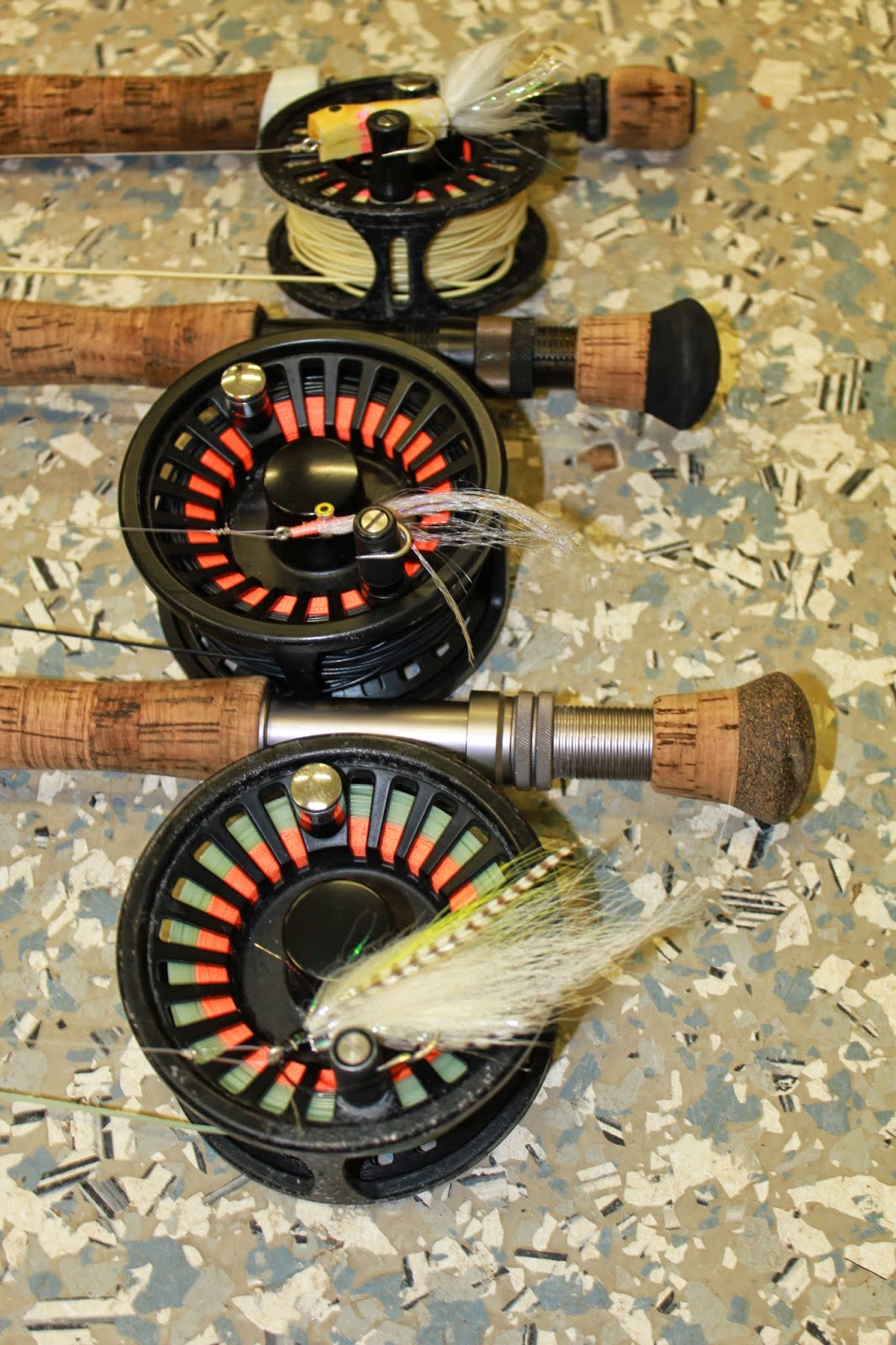
A friend just gave me a new fancy two side boat fly box, my old ones are all wooden ones with brass hinges and clasp that I get my woodwork students to make in Yr8 technology elective I teach. So I will take this new box and in it I will have a selection of 'go to' flies. Surface flies and barra flies one side, subsurface flies on the other side.

The two smaller versions of this see-thru box he also gave me will hold some extra flies for those special occasions - like crab patterns, scampi and squimp flies etc - in case the flats fishing develops the need to finesse the fish with more lifelike imitative patterns.

So while not taking my own boat, at least I will have a fly or two in the water this weekend - which always helps in catching fish !!!!

But another problem arises - I am such a pessimist ;(
    ----- I will also have no excuse not to catch fish except my own ineptness!!
         ------ we shall see......

Bynoe SWOFFING trip report and pictures to follow in next blog - will post Sunday or Monday